Introduction
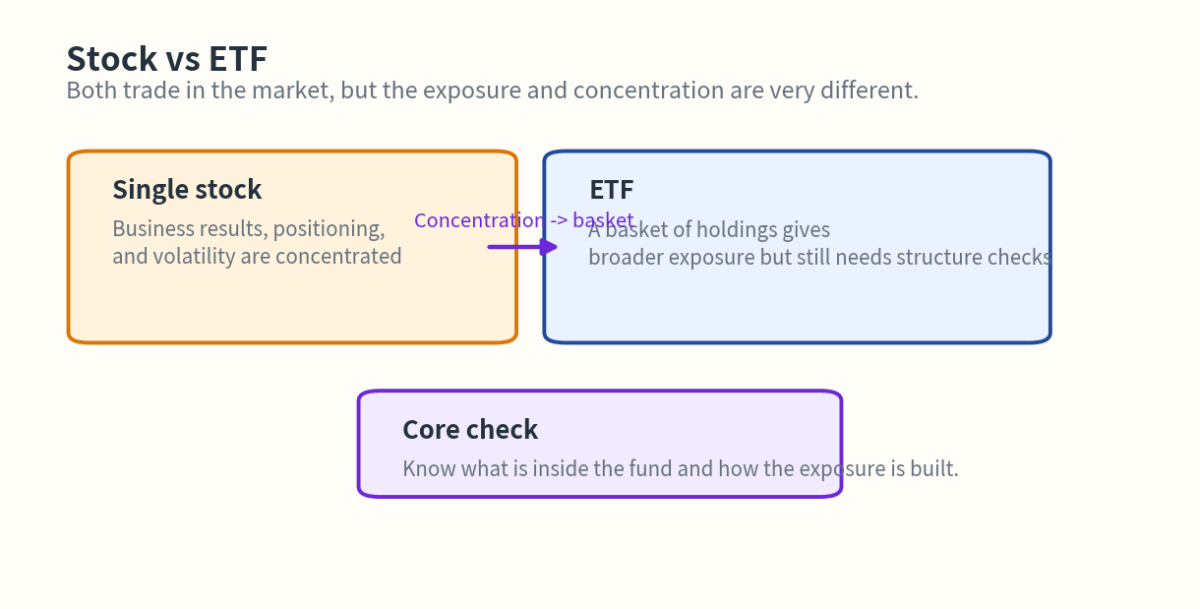
A stock gives exposure to one company. An ETF gives exposure through a packaged structure that can hold many securities, track an index, or target a theme. That sounds simple, but the practical difference matters a lot for risk, behavior, and expectations.
One-line summary
A stock is a single-company exposure. An ETF is a packaged market product with its own structure, rules, and tracking behavior.
Core framework
The most useful comparison is:
- stock: company-specific upside and downside
- ETF: packaged exposure with diversification and product structure
That means ETFs reduce some company-specific risk, but they also introduce structure-related questions that stock investors do not always face.
How it connects to investing
Stocks are usually better when:
- an investor has high conviction in one business
- company-specific analysis is the edge
ETFs are often better when:
- broad exposure matters more than one company
- diversification and simplicity are priorities
- an investor wants sector, index, or asset-class access
Visual guide
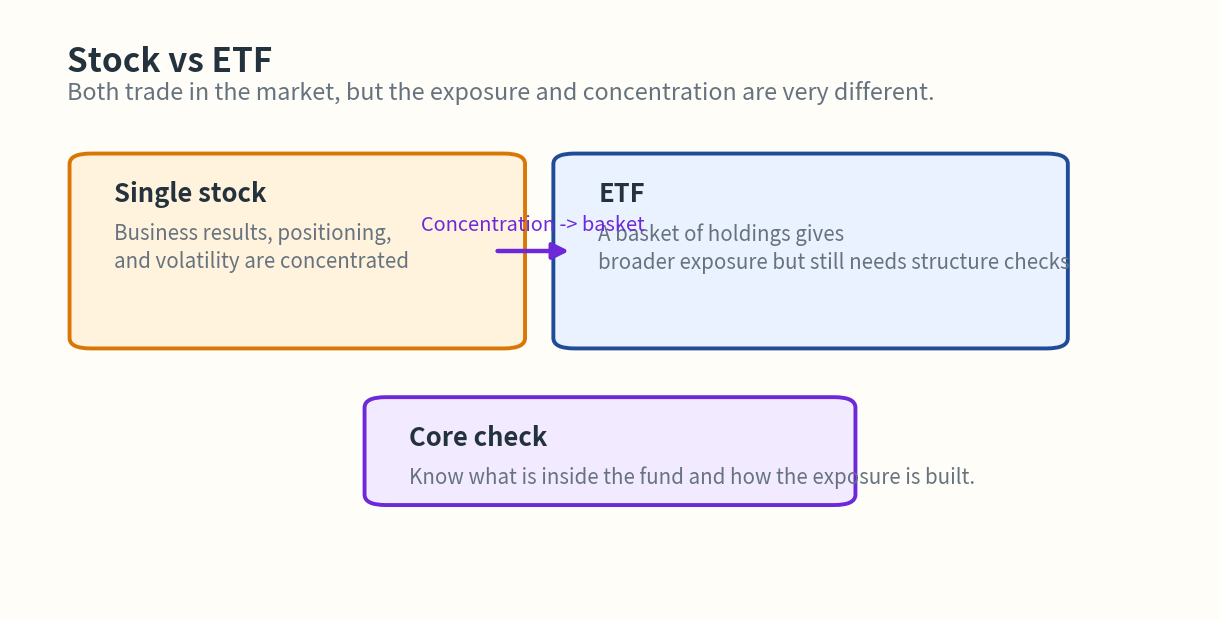
An ETF reduces single-stock concentration, but it also adds product structure.
Practical framework
Use this order:
- Decide whether the goal is company exposure or market exposure
- Ask whether concentration risk is acceptable
- Check the ETF’s structure before assuming diversification solves everything
Investor checklist
- Do you want one company or a basket?
- Is your edge in business analysis or in broad exposure?
- Are you comfortable with single-stock risk?
- Does the ETF structure match what you think you are buying?
Common mistakes
- Treating ETFs as automatically safe
- Treating stocks and ETFs as interchangeable
- Assuming diversification removes all risk
- Ignoring ETF structure and holdings
Summary
The key difference is not just one stock versus many holdings. It is company exposure versus product structure. That distinction shapes risk, expectations, and how investors should monitor the position.