One-line summary
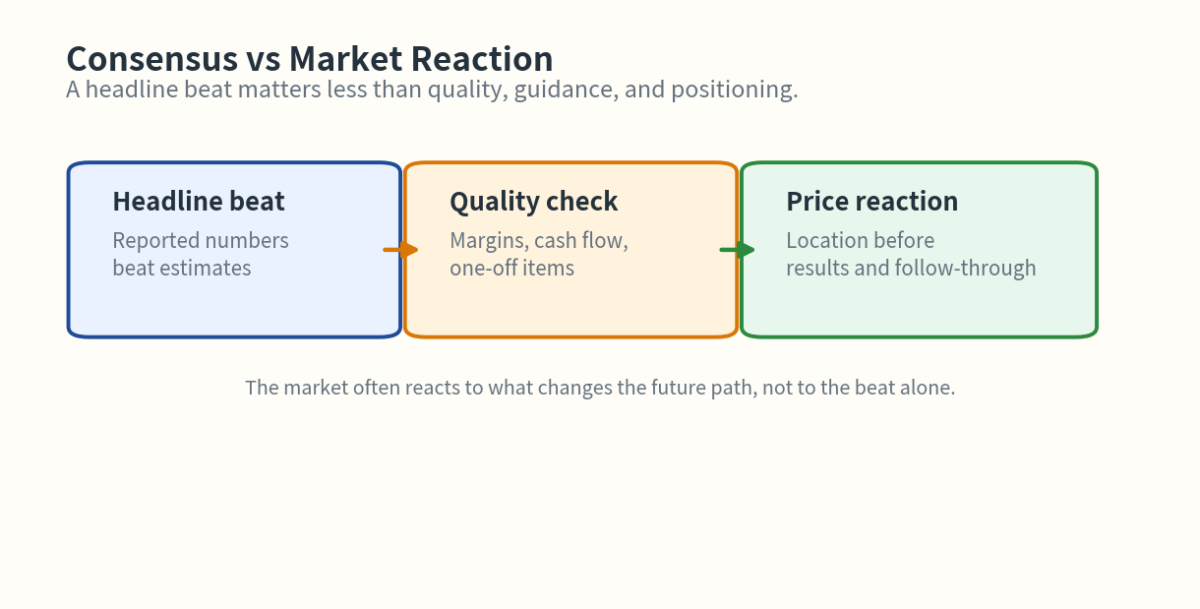
Beating consensus is only a starting point. Investors still need to ask which line improved, whether the improvement is repeatable, and whether the market agreed with it.
Why this matters
Beat is one of the most common words in earnings headlines. But DART itself does not provide analyst consensus. That means investors should not stop at the headline. They need to decompose the actual filing.
In practice, three things matter more than the beat headline:
- which account improved
- whether the improvement came from the core business
- whether the stock agreed with the interpretation
Where to look in DART
The practical order is:
- Ignore the beat/miss label at first
- Confirm revenue, operating profit, and operating margin
- Decide whether QoQ or YoY matters more
- Check whether the improvement looks core or one-off
- Check release-day and short follow-through price action
This process is much more useful than repeating the headline.
Core concept
Four questions matter more than the beat itself:
- Did revenue improve, margin improve, or both?
- Is the improvement likely to repeat next quarter?
- Did the core business improve, or did costs simply fall for a temporary reason?
- Did the stock and the numbers point in the same direction?
For example, modest revenue with sharply better margin can be a higher-quality result than a loud revenue beat with weak economics.
Visual guide
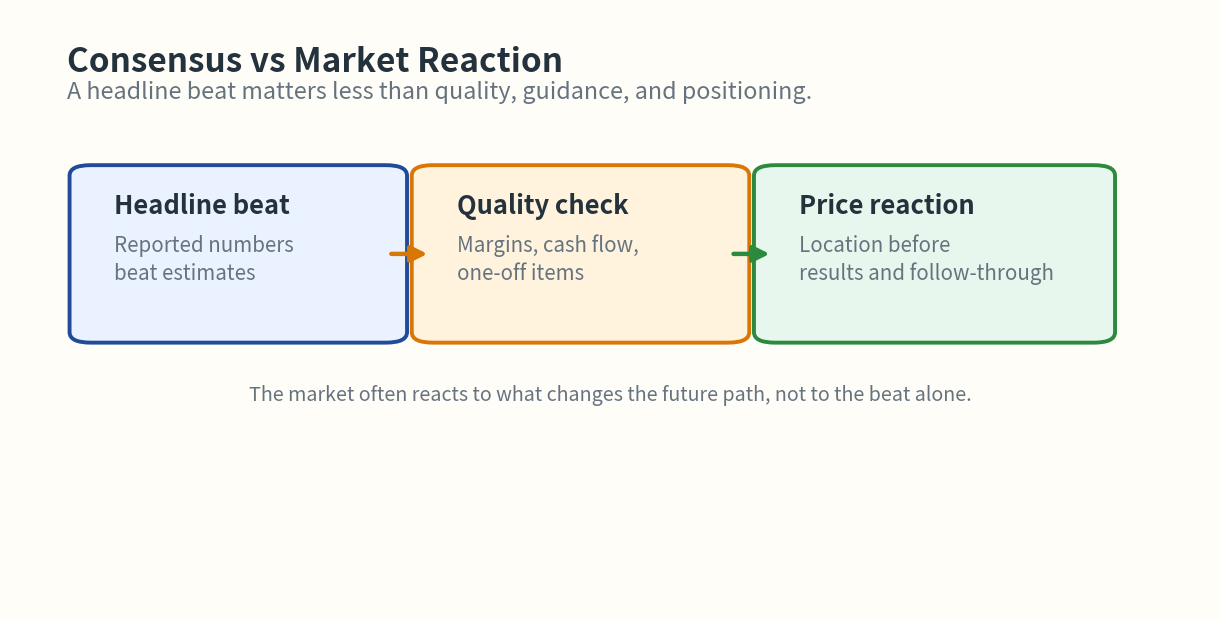
The headline beat is only the start. The structure of the numbers and the market reaction matter more.
Practical reading table
| Headline | Real structure | Common interpretation |
|---|---|---|
| Beat | Better revenue, weaker margin | Size improved, quality may still be mixed |
| Beat | Flat revenue, stronger margin | Quality may matter more than the headline |
| Miss | Weak sales, stable margin | Some business strength may still remain |
| Beat | Only net income improved | Non-core effects may be distorting the picture |
This is why investors should translate the headline into the earnings structure.
How the market reacts
Markets often care more about what improved than about whether it beat.
- Margin improvement can matter more than revenue beat
- One-off help can weaken the reaction even after a beat
- A weak release-day move can show that the beat was not good enough versus expectations
That is why the market can ignore a beat and still reward a lower-profile quality improvement.
Investor checklist
- Which account really improved?
- Was the improvement QoQ, YoY, or both?
- Did core business strength improve, not just reported profit?
- Did the stock confirm the interpretation?
- Did you translate the beat headline into actual filing structure?
Common mistakes
- Treating
beatas automatic good news - Giving equal weight to revenue beat and margin beat
- Treating net-income beat as proof of core improvement
- Repeating the headline without checking the filing
- Ignoring weak price reaction after a beat
Summary
Consensus beat is useful only as a starting point. The more valuable work is figuring out what improved, whether it was high quality, and whether the market agreed. That is where real earnings interpretation begins.